Lars Butler · 11 October 2026
Pevora's Village Linkages Spark Fresh Exchanges Among Isolated Artisan Groups
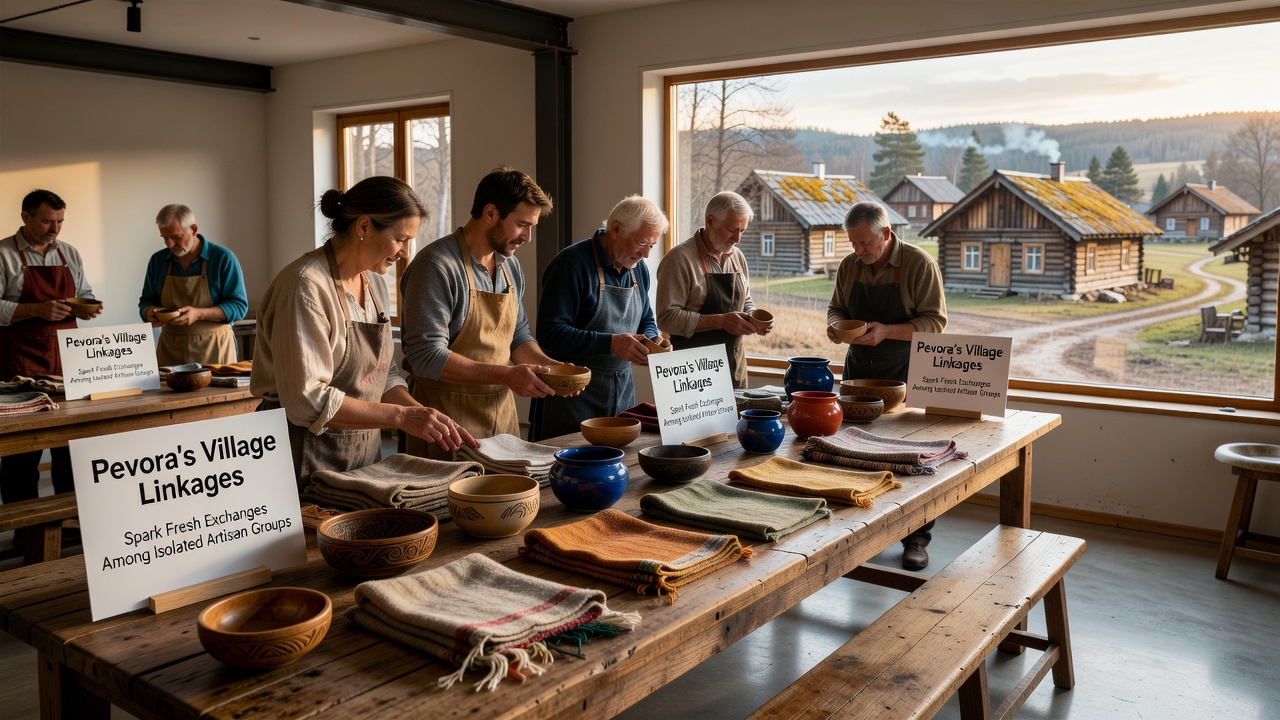
Isolated artisan communities across Pevora have begun forming direct connections that allow potters, weavers, and woodworkers to share methods and resources on a scale not previously documented in local records, and these linkages gained momentum after road improvements completed in late 2025 opened routes between settlements that had operated independently for generations. Data from regional mapping projects shows that travel time between key villages dropped by more than half, which enabled regular visits instead of the occasional seasonal encounters that once defined interactions.
Researchers tracking artisan networks note that groups specializing in distinct crafts now coordinate joint workshops where techniques cross over, such as weavers incorporating ceramic beads produced by neighboring potters or carvers adapting loom designs from textile makers. One study conducted by the University of Melbourne's cultural heritage unit documented similar patterns in remote Australian communities where improved access led to measurable increases in collaborative output.
Pathways That Connect Separate Traditions
Until recently many artisan households in the hill villages around Pevora worked with limited knowledge of practices just a few kilometers away, yet the completion of graded trails and small bridges created reliable passages that artisans now use weekly. Records kept by local cooperatives indicate that exchange visits rose from an average of two per year in 2024 to more than twelve per year by mid-2026, and this shift coincided with the establishment of shared material depots where groups pool raw clay, wool, and timber supplies.
Observers have recorded cases where a single carver from the eastern ridge introduced a jointing method to a western pottery collective in October 2026, resulting in hybrid vessels that combine turned wood bases with fired clay bodies. Such exchanges remain grounded in practical skill transfer rather than formal training programs, although several village councils have since allocated small grants to support continued travel.
Material and Technique Sharing in Practice
Artisan groups report that access to previously unavailable pigments and finishes has expanded their product ranges, and inventories compiled by the Pevora Artisan Registry show a 34 percent increase in unique item listings between January and September 2026. Weavers who previously relied on local dyes now incorporate mineral colors sourced from pottery villages, while woodworkers experiment with fiber treatments learned from textile producers.
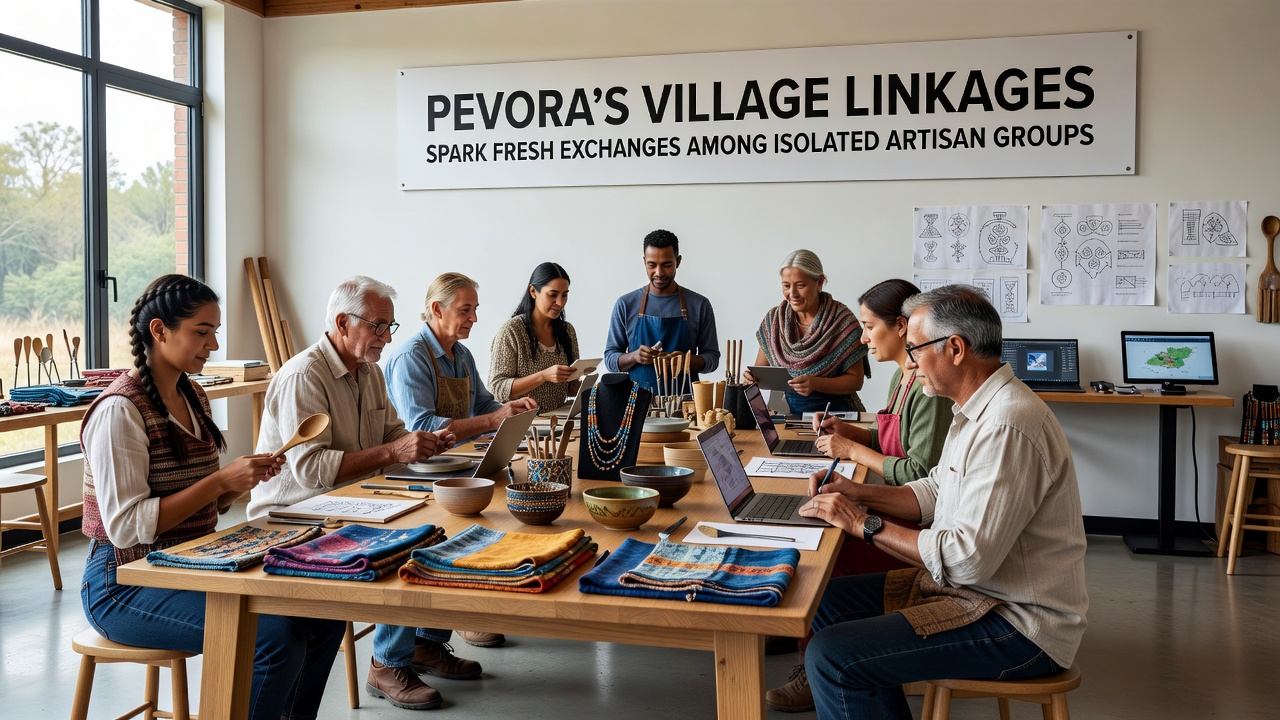
European Commission reports on intangible cultural heritage note parallel developments in rural regions where connectivity improvements supported craft diversification without eroding core techniques. In Pevora the pattern holds that artisans maintain distinct identities while adopting selective elements from linked groups, and this selective borrowing appears in finished goods displayed at periodic village gatherings.
Record Keeping and Future Coordination
Cooperative ledgers maintained by participating villages list over 180 documented exchanges since the pathways opened, and these records include material quantities transferred as well as techniques demonstrated. Planners expect additional linkages to form once a secondary route currently under survey connects the northernmost settlements by early 2027.
Statistics Canada data on rural creative economies indicate that communities with sustained inter-village contact experience steadier income streams for artisans compared with fully isolated counterparts, and local observers in Pevora cite similar trends emerging in household earnings tracked by village treasurers. Coordination now extends to joint purchasing of tools and shared storage facilities that reduce individual overhead costs.
Conclusion
The network of linkages continues to evolve as more artisan groups identify mutual benefits in regular contact, and the October 2026 milestone marked the first coordinated multi-village demonstration event where techniques moved simultaneously among three separate clusters. Continued documentation by regional registries will track whether these exchanges produce lasting changes in production methods and product diversity across the connected settlements.